
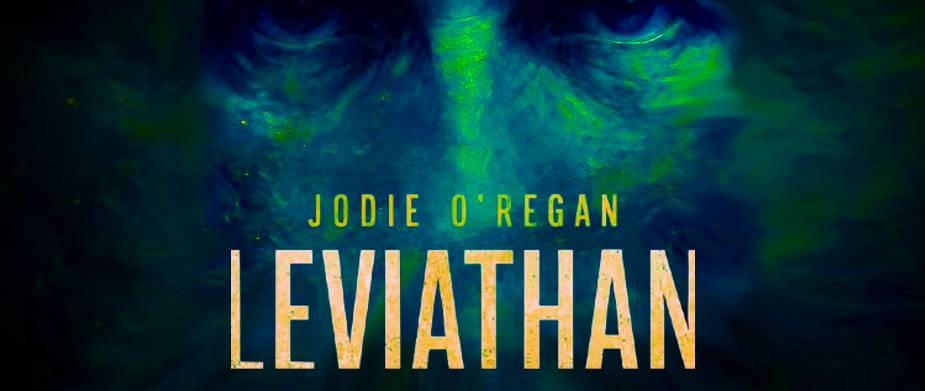
During the nineteenth century, whales in South Australia’s Encounter Bay were slaughtered to near extinction.
The empty ocean grieved for one hundred years before whales began to return.
Mother whales brought their calves to the bay each winter, while humans watched in wonder.
But as one cycle of devastation and repair slowly turned another began. The algal bloom spread.
Dead fish and other marine animals washed up on our shores.
Now grief, hope and fear mix together in the waves.
A chamber symphony for South Australia’s oceans
Leviathan began during covid, as a small commission for a friend who directs a South Australian wind quintet. She wanted a piece about hope and renewal. I was living on the South Coast, and thought the history of whaling in South Australia, and the long arc from slaughter to the establishment of a whale sanctuary in Encounter Bay, expressed these themes beautifully.
It took several years before her ensemble was able to perform it. By then, that piece had become the second movement of a much larger work, and the most ambitious work of my career.
Over the years, each completed movement has been workshopped and premiered as separate concert pieces by Chamber Music Adelaide, with leading South Australian musicians and creatives. Each performance has helped me discover the direction of the work. I’ve cherished seeing South Australian audiences respond to these movement-by-movement performances, building a sense of connection and growing curiosity for where the work may lead next.
As I prepare to write the final movement, the algal bloom has spread through these same waters. I am now beginning a series of listening posts in coastal communities, gathering words and reflections to thread through the final movement. I will complete and present the fourth movement at the SA Museum in November. After that, I will begin bringing the full work to life for the first time.
The Music Of Leviathan
Leviathan is scored for solo and choral voices, percussion, winds, strings and piano. It follows a four-movement symphonic arc across 80–90 minutes. Each movement has a distinct musical world: from driven and percussive, to mournful, to intimate and theatrical. It uses extended techniques and percussion sound effects to evoke whales and ocean.
The work moves from the naive, violent momentum of nineteenth-century whaling, to the grief of an empty ocean, to a mythic moment of invention and the strange making of music through whale bones. The final movement brings the work into the uneasy present, where hard-won hope is fortified by new fear.
Future Vision
Once the final movement is written and performed in November 2026, I will consolidate the four movements into a cohesive chamber symphony, extending and refining the music, sound-world, choreographed movement, multimedia and live performance elements. My aim is to create a unique and profoundly moving major work for South Australia.
I will draw together the different instruments currently spread across the movements into a chamber orchestra, retaining the chamber music intricacy of one instrument per part.
I want to extend the eerie ocean sound-world by incorporating and featuring a sailophone, a waterphone with extraordinary, whale-like sound effects, and make the choir’s voices more instrument-like by creating bespoke bariphones: large horn-like forms,
Leviathan is a dramatic work. After introducing staged action into the first movement, I want to greatly extend movement as part of the score, and also refine the dramaturgical pacing and shape. I think the music-making should be seen as well as heard, with the instruments and singers visibly part of the piece’s world. I will develop the costumes and multimedia and introduce lighting and puppetry.
My ultimate vision is to create a concert film of a live performance at Redruth Studio, the 150-year-old stone church where I live and work. Apart from incredible acoustics, the nave’s timber beams evoke a ship or the ribs of a whale. Working in my own studio will give me time and space to design and install the lighting and multimedia.

Movement I
LEVIATHAN
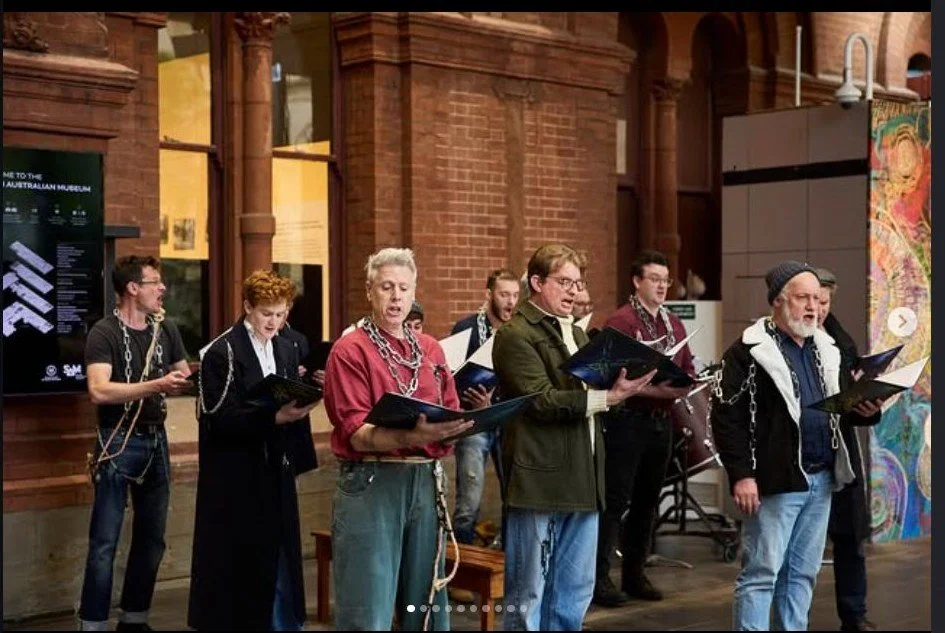
baritone soloists, male voice choir, percussion
premiered November 2025 SA Museum
Chamber Music Adelaide
ON THE TERRACE FESTIVAL
In the nineteenth century the industrial hunger for whale oil drove men across the oceans to hunt and slaughter whales. This music is driven and muscular, with male voices and percussion centered around an orchestral bass drum. The performers sing, shout, chant and create vocal sound effects and percussion.
I was inspired by the all-in theatricality of Manowar’s Gods Of War, Orff’s Catulli Carmina, and the rich sound of Russian male voice choirs. Leviathan begins with the call of the sea, then turns to a jingoistic hymn for the industrial age, before driving into a frenzied, bloody hunt where the singers pursue the leviathan until the boat smashes and the men sink into the ocean.
For the libretto I created a montage from fragments of nineteenth-century texts by John Philip Sousa, Thomas Carlyle, Charlotte Smith, Vincent Van Gogh, Lord Tennyson, A E Housman and Rudyard Kipling.
Movement II
ELEGY FOR A GRIEVING OCEAN
wind quintet, baritone, percussion
premiered November 2024 SA Museum
Chamber Music Adelaide
ON THE TERRACE FESTIVAL
This movement was commissioned by Linda Pirie for Windsong Quintet and workshopped with Chamber Music Adelaide. After the premiere, it toured regionally in South Australia. I wanted the haunting colours of the winds and vibraphone to carry both the ocean’s emptiness and its sorrow, set against the ceaseless motion of the waves, like grief concealed within constant movement. I wrote the baritone line as a sixth wind instrument, moving within the texture rather than above it.
For the performance, software architect Emlyn O’Regan developed a responsive multimedia projection using microphones to “hear” the instruments. This drove elements of the projection in real time. For the libretto, I used poetry from Afanasy Afanasyevich Fet, Matthew Arnold and Charlotte Smith.
Movement III
CANA CLUDHMOR
soprano, extended piano, percussion
premiered Adelaide Town Hall May 2024
Chamber Music Adelaide
PERSPECTIVES CONCERTS
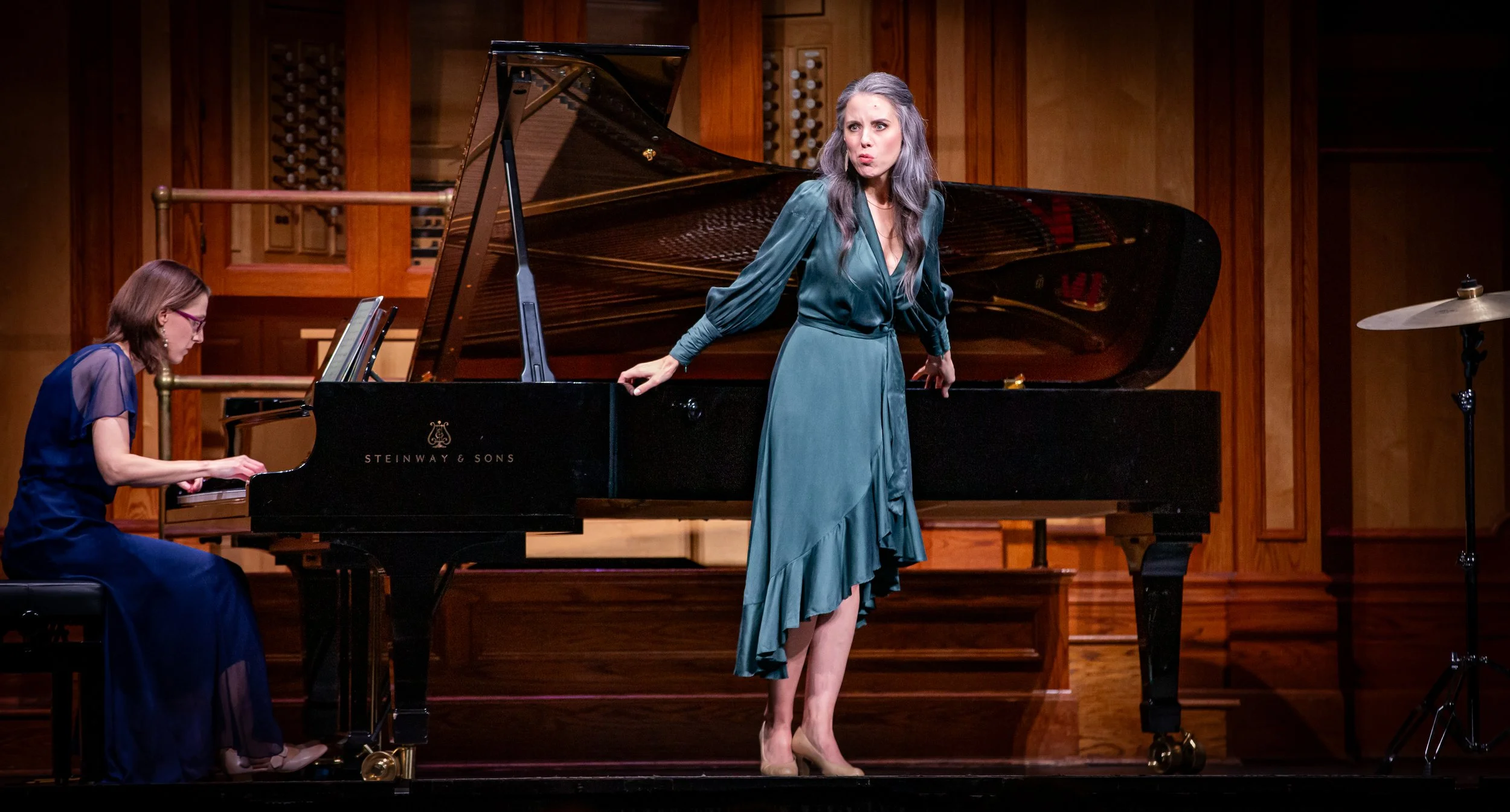
This movement is essentially a mini-opera. Its protagonist, the fictional poet Cana Cludhmor, speaks directly to the audience, narrating her own story. I was inspired by an Irish storyteller I saw perform, who wove speaking, musical underscoring and singing to bring his story to life.
Cana comes from a medieval Irish tale describing how the first harp was inspired by the sound of wind moving through the sinews and bones of a whale skeleton on a beach.
This movement is a suspended point within the larger work: death, life and invention as music is conjured from whale bones. In the larger work, I wanted to show that humans who have slaughtered whales can also create something as beautiful as a harp.
I wrote the libretto, and the extended piano techniques include mallets and guitar plectrum across the piano strings.
Movement IV
SANCTUARY OF SORROWS
mezzo-soprano, string quintet
to premiere November 2026
Chamber Music Adelaide
ON THE TERRACE FESTIVAL
Sanctuary of Sorrows will bring Leviathan into the uneasy present. I imagine a mother whale returning to Encounter Bay with her calf, singing a quiet lullaby as they move through algal bloom-infested water. I want the music to capture the tenderness and fear of that swim.
For this final movement I will use mezzo-soprano and baroque strings. Together they bring both heart and a wild rawness that feels right for this music. I will thread words from South Australians living in coastal communities through the libretto, so the human experience of the bloom is present in the work.
Like the mother whale, we sing lullabies to our children in the circumstances of our lives. We still sing in fear and unease, weaving in threads of hope that persist despite everything.

THANK YOU
to the South Australian musicians, creatives and partners who have brought this work to life.
MUSICIANS
Windsong Wind Quintet | Andrew Wiering | Desiree Frahn | Penelope Cashman | Festival Statesmen Chorus | Emlyn O’Regan |Jamie Moffatt | Nicholas Cannon | Alex Roose | Mark Oates | Adelaide Baroque | Sally-Anne Russell
CREATIVES
Emlyn O’Regan - bespoke multimedia
Clare Langsford - costume design
Nicholas Cannon - director
Jonathan Bligh - conductor
RESEARCH
Kerryn Bickley
VENUE & FUNDING PARTNERS
Chamber Music Adelaide
CreateSA
City Of Adelaide
Linda Pirie
South Australian Museum | Adelaide Town Hall | Windsong Wines Winery | Victa Cinema | Redruth Studio
